

Am I a Candidate for Dental Implants? 5 Key Factors
What Dr. Ngo evaluates before recommending implants, and how modern techniques expand your options
You’re probably a candidate for dental implants if you’re missing teeth, your gums are healthy or can be treated, and you have enough jawbone or can have it rebuilt. Far more people qualify today than ten years ago, including many who were once told no.
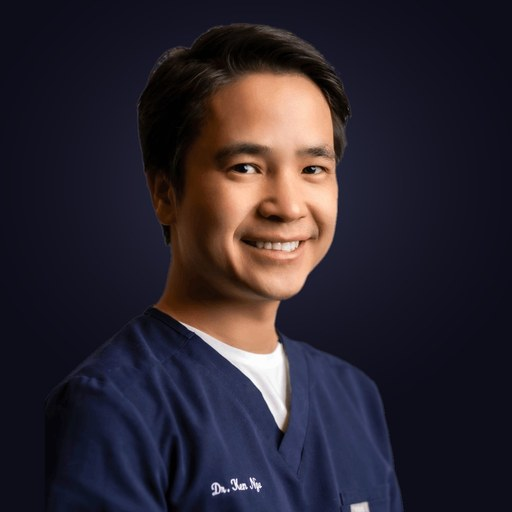
Here are the five key factors Dr. Ken Ngo, DMD, FICOI, evaluates when determining whether dental implants are right for you, and how modern approaches can expand your options even if you’ve been told “no” elsewhere.
1. Jawbone Density and Volume
Dental implants are titanium posts that fuse directly with your jawbone through a process called osseointegration. For this to work, you need sufficient bone density and volume at the implant site. If you’ve been missing teeth for a long time or have worn dentures for years, your jawbone may have lost significant mass, a natural process called resorption that happens when bone is no longer stimulated by tooth roots.
But reduced bone density doesn’t necessarily mean implants are off the table. Two solutions can help. First, bone grafting adds bone material to the jaw to rebuild volume. It adds several months of healing time before implant placement, but it can make implants possible for patients who otherwise wouldn’t qualify. Second, the All-on-4 technique uses angled implants that engage denser areas of bone near the back of the jaw, often eliminating the need for grafting entirely. This is one of the biggest advantages of the All-on-4 approach. Many patients who are told they don’t have enough bone for traditional implants are excellent candidates for All-on-4.
At our Vancouver, WA office, Dr. Ngo uses advanced 3D cone beam CT scanning to create a detailed map of your jawbone. This imaging reveals exactly how much bone you have, where the densest areas are, and whether grafting would be necessary. It takes just minutes and gives us information that a standard dental X-ray simply can’t provide.
2. Overall Health and Medical Conditions
Dental implant surgery is a minor outpatient procedure, but it is still surgery. Your overall health matters. Conditions that affect healing, such as uncontrolled diabetes, autoimmune disorders, or active cancer treatment, can increase the risk of implant failure. However, “uncontrolled” is the key word. Patients with well-managed diabetes, for example, have implant success rates nearly identical to patients without diabetes.
Certain medications also deserve attention. Blood thinners, bisphosphonates (used for osteoporosis), and some immunosuppressants can affect healing. Dr. Ngo reviews your complete medical history and coordinates with your physician when needed to ensure implant treatment is safe for you. In many cases, a medication adjustment or specific timing of the procedure is all that’s needed.
For patients who are anxious about the surgical aspect, All On Smile offers sedation dentistry options ranging from oral sedation to IV sedation. Many patients tell us they remember nothing about the procedure and are surprised by how comfortable the experience was.
3. Gum Health
Healthy gums are essential for successful implant placement. Active periodontal (gum) disease creates an environment where bacteria can attack the tissue around the implant, leading to a condition called peri-implantitis, basically gum disease around an implant. If left untreated, this can cause the implant to fail.
The important thing to understand is that gum disease is treatable. If you currently have periodontal issues, Dr. Ngo will recommend addressing those first before placing implants. This might mean a deep cleaning, targeted antibiotic treatment, or other periodontal therapy. Once your gums are healthy and stable, implant placement can proceed with confidence. Gum disease is a speed bump, not a roadblock.
4. Smoking and Tobacco Use
Smoking is one of the most significant risk factors for implant failure. Tobacco restricts blood flow to the gums and jawbone, which directly impairs healing after surgery. Studies show that smokers have implant failure rates roughly two to three times higher than non-smokers.
Does this mean smokers can’t get implants? Not necessarily. Dr. Ngo evaluates each patient individually. Patients who quit smoking before the procedure and during the healing period have significantly better outcomes. Even reducing tobacco use makes a measurable difference. We’ll discuss your habits honestly and help you understand the risks so you can make an informed decision. Many patients across the Clark County and Portland area have used their implant journey as motivation to quit for good.
5. Age Considerations
There is no upper age limit for dental implants. We’ve successfully placed implants for patients well into their 80s. As long as you’re healthy enough for a minor surgical procedure, age alone will not disqualify you. In fact, older patients often benefit the most from implants because they’ve typically struggled with dentures or failing teeth for years and are ready for a permanent solution.
There is a minimum age consideration, however. Dental implants should not be placed until the jawbone has finished growing, which is typically around age 18 for women and 21 for men. Placing implants before growth is complete can lead to alignment issues as the surrounding bone continues to develop.
How We Determine Your Candidacy
The only reliable way to know if you’re a candidate for dental implants is a comprehensive evaluation. At All On Smile, your free consultation includes a 3D cone beam CT scan that gives Dr. Ngo a complete picture of your jawbone structure, nerve locations, and sinus proximity. Combined with a thorough review of your health history and an in-person examination, this allows him to give you a definitive answer, not a guess.
If you’ve been told by another dentist that you’re not a candidate, it’s worth getting a second opinion. The All-on-4 technique, bone grafting advancements, and 3D-guided surgical planning have made implants accessible to patients who would have been turned away just a few years ago. Our office at 12503 SE Mill Plain Blvd, Suite 222, Vancouver, WA serves patients from across the Portland-Vancouver metro area who want a thorough, honest evaluation of their options.
Candidacy is usually the first of several things people want to know. Our list of dental implant questions we hear at every free consult answers the rest, from pain and timelines to cost and care.
Get Your Free Implant Evaluation
Schedule your free consultation today. Call (360) 844-2170 or book online.