


Dental Implant Insurance Coverage: What’s Covered and What’s Not
How to navigate insurance benefits and make dental implants affordable in Vancouver, WA
Most dental insurance covers part of an implant, not all of it: what’s covered is often a piece of the treatment, like the crown, extractions or imaging, up to a yearly maximum. Dental plans were designed around cleanings and fillings, not implants, but your benefits can still help.
This guide breaks down what dental insurance typically covers, what it doesn’t, and how to get the most out of your plan when you’re considering implants.
Why Insurance Doesn’t Fully Cover Dental Implants
Most dental insurance plans classify procedures into three tiers: preventive (cleanings, exams, X-rays), basic (fillings, simple extractions), and major (crowns, bridges, dentures). Dental implants often fall into the “major” category, but many plans either exclude them entirely or cap the benefit at a fraction of the total cost.
The reason comes down to how dental insurance is structured. Unlike medical insurance, dental plans are designed around a yearly maximum, typically $1,000 to $2,500 per year. That annual cap has changed little in decades, even though the cost of dental care has risen significantly. A yearly maximum of $1,500 covers routine care just fine, but it barely makes a dent in a $2,999 single implant or an $17,999 All-on-4 procedure.
Some newer and premium-tier dental plans do include implant coverage, typically at 50% of the allowed amount up to the annual maximum. A growing number of medical insurance plans may also cover implant-related procedures if they’re deemed medically necessary, for example, following trauma or cancer treatment. It’s always worth checking both your dental and medical policies.
What IS Typically Covered
Even if your plan doesn’t cover the implant itself, it likely covers several components of the overall treatment. These individual covered procedures can add up to meaningful savings:
- Tooth extractions: Most plans cover simple and surgical extractions at 60–80%. If you need teeth removed before implant placement, this portion of the cost is often covered.
- Bone grafting: Some plans cover bone grafts as a surgical procedure, especially when tied to an extraction. Coverage varies widely. Check your plan’s surgical benefits.
- The final crown: Many plans cover the crown (the visible tooth portion) that sits on top of the implant, since crowns fall under standard “major restorative” benefits. This is often covered at 50%.
- Diagnostic imaging: X-rays and CT scans used for treatment planning are typically covered under diagnostic benefits.
- Consultations and exams: Your initial evaluation is usually covered as a diagnostic visit.
Coverage rules vary widely by plan, so check your policy documents or call your insurance company for specifics. All On Smile does not accept or bill dental insurance.
What’s Usually NOT Covered
The parts of implant treatment that insurance most commonly excludes are:
- The implant post itself: The titanium screw that goes into your jawbone is the component most often excluded or limited.
- Surgical implant placement: The surgical procedure to place the implant is frequently excluded or subject to the annual maximum.
- The abutment: The connector piece between the implant and the crown may not be covered separately.
- Sedation beyond local anesthesia: IV sedation and oral conscious sedation are typically out-of-pocket costs.
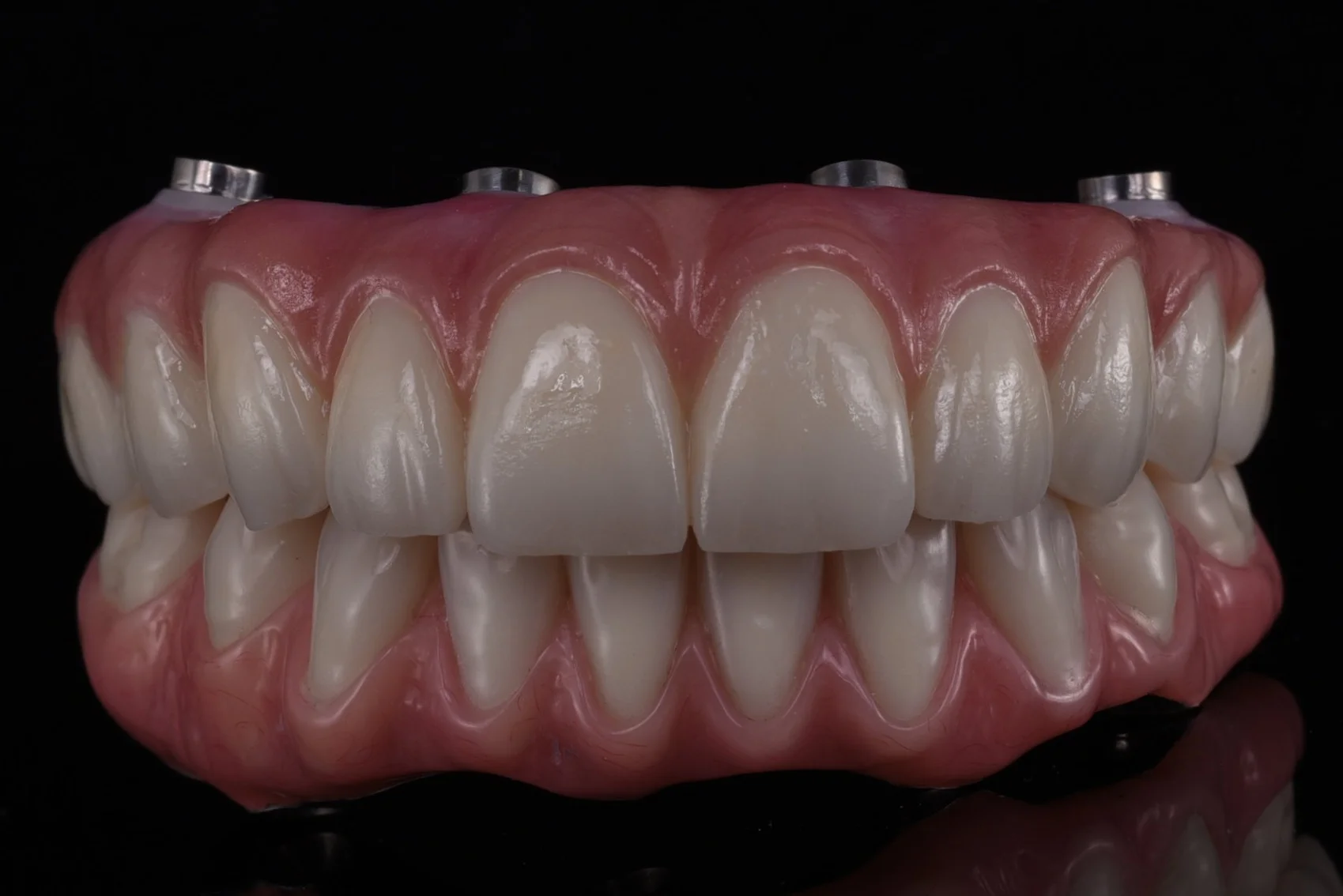
- Full-arch prosthetics: The full set of teeth in an All-on-4 procedure is usually not covered as a standard benefit.
How to Maximize Your Insurance Benefits
Even with these limitations, there are smart strategies to get more value from your insurance when planning implant treatment:
Get pre-authorization. Before starting treatment, ask your dentist’s office to submit a pre-treatment estimate (also called pre-authorization or pre-determination) to your insurance company. This gives you a written estimate of what your plan will pay before you commit.
Time your treatment around benefit periods. If your treatment can be split across two calendar years, you can potentially use two years’ worth of annual maximums. For example, extractions and bone grafting in December, implant placement in January. That could double your available benefits from $1,500 to $3,000.
Use your HSA or FSA. Health Savings Accounts and Flexible Spending Accounts let you pay for dental implants with pre-tax dollars, effectively reducing your cost by 20–30% depending on your tax bracket. This works regardless of what your insurance covers.
Check for missing tooth clauses. Some plans have a “missing tooth clause” that excludes coverage for replacing teeth that were already missing when the policy started. If you’re considering a new dental plan, look for one without this exclusion.
Appeal denied claims. If a claim is denied, it’s worth appealing, especially if you can provide documentation showing that the implant is medically necessary rather than purely cosmetic.
Financing Options Beyond Insurance
Insurance rarely covers the full cost of implant treatment, and All On Smile does not accept dental insurance. Instead, we offer all-inclusive pricing and monthly financing through outside lenders for patients paying for their own care.
- Cherry, Proceed Finance and Happen Bank (formerly LendingClub) financing: Low-interest and 0% APR options available for qualified applicants, with terms from 6 to 60 months.
- HSA/FSA funds: Use pre-tax dollars to cover your out-of-pocket portion.
- Credit cards: We accept all major credit cards.
A single tooth implant at $2,999 financed over 24 months comes out to roughly $125 per month, less than many car payments. For more details on affordability, see our guide on affordable dental implants and payment plans.
We’ll Help You Figure It Out
Navigating dental insurance is confusing. All On Smile keeps it simple: we do not bill insurance, and at your free consultation you receive a clear, all-inclusive price for your treatment plan before any treatment begins. We’re located at 12503 SE Mill Plain Blvd, Suite 222, Vancouver, WA 98684, and we serve patients throughout Clark County and the Portland metropolitan area.
Plan Your Treatment With One Clear Price
Schedule your free consultation today. Call (360) 844-2170 or book online.